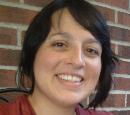
Healthy Schools Hero Award 2009
Ruth Breech
Every year, to mark the anniversary of the March 18, 1937 Texas School
Explosion, I name a Healthy Schools Hero who
demonstrates extraordinary responsibility and inspirational leadership
for safety in schools.
The 2009 Healthy Schools Hero Award winner is Ruth Breech, Program Director at Global Community Monitor
in El Cerrito, CA. Ruth Breech was nominated by Peter Fugazzotto,
Director of Oceans and Communities, for her work to protect school
children in Addyston, Ohio from the hazards
of toxic industrial pollution.
Described in the media as a "tenacious, high-energy community
activist," Breech is motivated to "tell the untold story" of the people
who suffer in silence in "fenceline" communities such as Addyston, OH.
Breech's leadership shows how individuals and community groups can work
together to break the silence about hazards and stimulate government agencies to take necessary action.
Like the Healthy Schools Heroes before her, I hope Ruth Breech's story can inspire others to break the silence about
environmental health hazards and to take action to save lives where
chemical hazards and other unhealthy conditions in school and
communities are routinely ignored.
Once upon a time in Addyston, Ohio...
From 2003 to 2007 Ruth Breech was an organizer with Ohio Citizen Action, www.ohiocitizen.org, an
environmental watchdog organization that runs anti-pollution Good
Neighbor Campaigns. Ohio Citizen Action uses the power of community
organizing to convince major industries to prevent pollution at their
facilities.
In his nomination, Fugazzotto wrote: "Ruth led the community fight
in Addyston, Ohio that resulted in reducing the dangerous exposure to
toxic chemicals from Lanxess Plastics, a 130-acre chemical plant
directly across from an elementary school. Her work helped inform the
recent USA Today investigative series "Toxic Air and America's Schools" focusing on toxic pollution from factories creating hazards for school children...She's an inspiration."
Ruth Breech, now at Global Community Monitor (GCM)
in El Cerrito, CA , shares her experience and expertise with
communities across the country. In her first year at GCM, she assisted
in training 1,000 community members and mothers to fight back for their
health and future generations, especially low income residents and
people of color in communities that suffer from an unfair burden of
pollution.
Breaking the silence.
In September, 2004, Breech
began to visit Addyston two to three times a week with a cadre of
canvassers ringing doorbells and asking residents what it was like
living in such close proximity with the plastics plant.
The residents talked about the persistent odors from the plant, the
dust that collected on their cars, and the large number of illnesses
such as asthma and cancer in the neighborhood.
For most
residents it was the first time anyone had asked them about whether or
not the odors from the plant were bothering them and it got them
talking among themselves. Some residents near the plant were so
concerned that they were trained to conduct their own environmental
monitoring with air sampling "buckets" made from 5 gallon plastic
buckets, plastic liners, and sealed lids with a small air pump to
create a vacuum. Their air monitoring showed serious air quality
problems.
"Ruth Breech did an amazing job of helping neighbors organize and
meet every week," said Executive Director Sandy Buchanan, quoted in the
article "Addyston, Ohio: The Plastics Plant Next Door" by Steve Lerner,
online at The Collaborative on Health and the Environment (CHE). (www.healthandenvironment.org)
Addyston is a working-class factory town on the banks of the Ohio
River 12 miles from downtown Cincinnati in the Ohio/Kentucky/Indiana
tri-state area. Addyston is a company town where 97 percent of the tax
revenues come from the Lanxess plant. Most residents have family
members or friends who work at the plant. Speaking out against Lanxess
was seen as threatening to local jobs and economy.
"It is a culture where it is not accepted to rock the boat," said Breech.
Advocacy in Action
"She
went into a highly charged environment in a small company town where
the mayor was not happy with an outside group raising issues about air
quality and she did not back down. Through canvassing and
walking-and-talking tours through Addyston, Breech continued to find
new people willing to speak out and keep pressure on Lanxess to clean
up its act, " said Buchanan.
Breech worked with the community to learn about the health risks of
the chemicals they found and to ask the hard questions they needed to
ask.
She was not trying to close the plant. "We want them to
stay here. We don't want them to shut down. That is not our intention.
We are here to clean them up. We want them to be good neighbors for a
very long time," she says.
Over 26,000
members of Ohio Citizen Action sent handwritten letters and petitions urging Lanxess Plastics managers to work
with neighbors to cut emissions and make their community safer and
healthier. The fact that so many people from around the region got involved
made a big difference. Read more about the campaign at http://www.ohiocitizen.org/campaigns/bayer/bayer.html
Reacting to community health concerns and community sampling data
about the impact of emissions from Lanxess, the Hamilton County
Department of Environmental Services installed air monitoring equipment
on the roof of Meredith Hitchens Elementary School.
On December 6, 2005, after hearing results from the Ohio
Environmental Protection Agency's (OEPA) seven month monitoring of air
quality, Three Rivers School District officials closed the Meredith
Hitchens elementary school attended by 370 preschool to first grade
students. On June 14, 2006, The U.S. EPA issued an 8-page Notice of
Violation against Lanxess citing air pollution problems, leaks in the
chemical piping system, and asking questions about wastewater
discharge.
As a result of Ohio Citizen Action's campaign, Lanxess committed to
invest $1 million to reduce butadiene emissions, another $1.5 million
to reduce accidents, appointed a new plant manager and opened positive
dialogue with the community and parents.
"Most Americans expect that the
government will protect them from chemical releases [such as those at
Lanxess]," said Hagit Limor, one of the first reporters to report on
the Lanxess pollution. "But what emerged as I did these stories was
that government officials do not lead on these issues but rather need
to be led."
"It has been left up to grassroots groups and the media to shine a
light on chemical pollution problems. As a result, a lot of
corporations that are responsible for a lot of pollution are flying
under the radar...and that leaves the population at risk," she says.
~~~~~~~~~~~~~~~~~~~~~~~~~~~~~~~~~~~~~~~~~~~~~~~~~~~~~~~~~~~~~~
|